 Skip to content
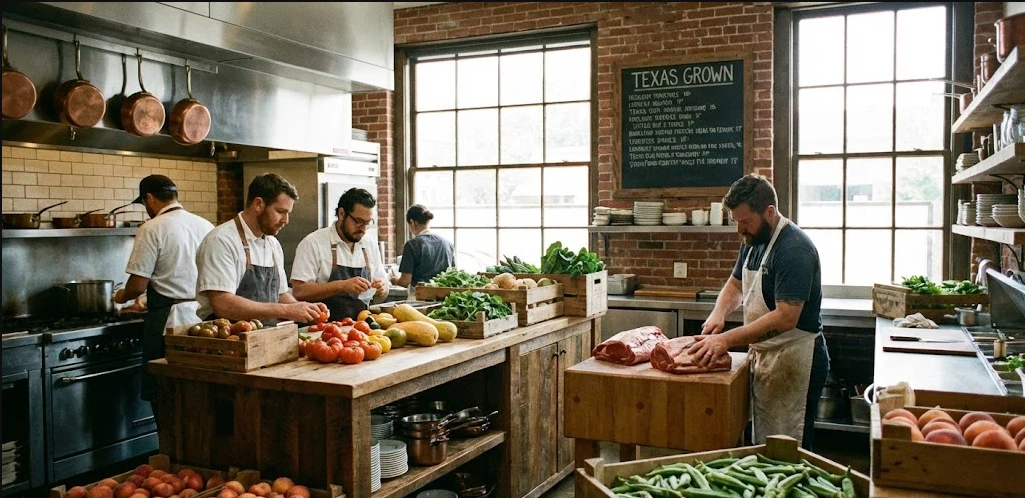
The food habits of the Texans are changing. There is an increased interest among more people on the origin, production and the producer of their food. This change has contributed to forming one of the strong trends in the state as Texas farm-to-table dining.
Small towns and large cities have restaurants that are creating menus and building around fresh products, meat being raised locally, the harvest, and direct cooperations with farmers. This guide describes the rise of the trend, its importance, and what the diners are supposed to expect when opting to go locally in Texas.
The real meaning of farm-to-table
Farm-to-table is not only about the service of organic food or the incidence of local products. It is aimed at reducing the supply chain between the kitchen and producer. Restaurants deal directly with:
- local farms
- ranchers
- fisheries
- artisan food producers
In most instances, ingredients can reach in a few hours or days after harvest. This enables the chefs to base their menus on the availability at a particular moment as opposed to operating with large distributors.
This method has gained great popularity in Texas where there is a vast variety of agriculture such as vegetables and fruits, beef, poultry, dairy, and grains.
The reason behind this movement taking off throughout Texas
The Texas farm-to-table dining is growing due to a number of reasons.
To start with, consumers have increasingly been sensitive to the quality of food. Raw products can be healthier and tastier and have improved texture.
Second, the citizens of Texas are becoming more concerned with the idea of promoting local businesses. Eating local serves to retain money within local communities and build anti-global food webs.
Third, chefs have freedom of creation. The seasonal menus enable the restaurants to change the menu with every season and explore flavors depending on the harvests around.
The ways in which the Texas agriculture contributes to the local food
Texas is a large agricultural producer in the country. The farmland in the state is usually diverse and therefore restaurants are able to get high number of ingredients locally all year round.
The most popular local products are:
- grass-fed beef
- free-range poultry
- fresh eggs
- seasonal vegetables
- peaches, melons, and citrus
- artisan bread and cheeses
This agility has enabled Texas farm-to-table to be a sustainable and viable business concept instead of a very small niche idea.
What the diners are attracted to first is freshness and taste
The most evident distinction between types of the restaurant orientation on farm is the taste of food. Harvested ingredients are more likely to preserve their natural moisture, texture, and aroma as it is nearer to the time the ingredient is going to be served.
Vegetables tend to be crunchier. Sources of meat and poultry are traceable. The herbs are much fresher and smeller. To many people who dine at its restaurants, it is this enhanced quality that they go back even after eating.
The financial effect of the local communities
When the restaurants purchase the products of the farmers directly, the money circulates in the locality rather than flowed via national chains of distributors. This strengthens:
- small family farms
- local food processors
- rural communities
- independent restaurants
Therefore, Texas farm-to-table food is not merely a national food movement. It is also an economic support network to the state producers.
Environmental and sustainability
The local sourcing minimizes transportation distances. This assists in reducing emissions of fuel and delivery. Other responsible growing methods that are applied in many farms include rotation of crops, conservation of water and minimized chemicals.
Local sourcing restaurants tend to:
- waste reduction by planning the menu seasonally.
- do not buy anything that is not at hand.
- size portions depending on amount of ingredients available.
These practices are combined to ensure farm-based Dining is greener.

Naturally, problems facing farm-to-table restaurants
As much as the advantages are obvious, being able to run a restaurant of a farm-based institution is not all the time.
Weather can affect supply. Certain ingredients may be restricted by the droughts, storms and changing of seasons. The prices may tend to vary according to the harvest magnitude and demand.
The restaurants also have to be flexible with menu planning. There could also be dishes, which may be eliminated temporarily, in case of unavailability of some products.
Nevertheless, Texas farm-to-table is characterized by an increase in long-term investments.
What customers are to expect when they opt to visit farm-based restaurants.
And in case you are a neophyte in locally sourced dining, there are a few things to look forward to:
- menus change more often
- ingredients vary by season
- portion sizes could be a response to the availability of ingredients.
- dining is based on lightness and nature.
This type of cuisine also has a greater focus on the quality of ingredients, as opposed to thick sauces or pre-manufactured products.
Delicious & Wholesome Snacks from Unchained Foods
If you’re looking for better‑for‑you snacks that don’t compromise on flavor, Unchained Foods offers an exciting range of wholesome, protein‑packed options perfect for every lifestyle. From clean ingredient lists to bold, satisfying taste, Unchained Foods is dedicated to helping you snack smarter with products that fuel your day without unnecessary additives. Whether you’re focused on fitness, wellness, or simply crave great‑tasting food, explore the tasty lineup and mission‑driven approach at UnchainedFoods where real ingredients meet real satisfaction.
Farm-to-table vs traditional restaurant supply chains
| Feature | Farm-Focused Dining | Traditional Supply Chain |
| Ingredient sourcing | Local farms and producers | National distributors |
| Delivery distance | Short and regional | Long and nationwide |
| Menu flexibility | Seasonal and rotating | Mostly fixed |
| Freshness window | Very short | Often extended storage |
| Community impact | Supports local economy | Limited local support |
How to find true farm oriented restaurants
All restaurants, which call their practices local, are not necessarily farm-based. Look for:
- express references to farm partners.
- seasonal menu descriptions
- product knowledge among staff of origin of ingredients.
- rotating menu items
The use of farm-to-table restaurants in Texas is authentic; in most cases, authentic restaurants become transparent about their suppliers and sourcing practices.
The future of the local restaurants in Texas
The collaboration between restaurants and producers is becoming easier due to technology, online farm ordering related systems and improved logistics. With the ever growing consumer demand, smaller restaurants are going towards local sourcing models, and larger hospitality groups start to follow suit.
New farmers are also getting connected with chefs as a result of education programs and food cooperatives that will continue to get the new farmers connected to the farm to table dining within the Texas territory in the next decade.
Final thought
The farm-oriented barbecuing is transforming the food experience among Texans. It is more transparent, promotes local agriculture and empowers local economies and provides fresher and healthier meals, which are even more flavorful. This trend seems to become an established phenomenon in the sphere of Texas dining as the increase of restaurants devoting their efforts to local sourcing and seasonal menus.
